
Selecting the right Logistics Partner Morocco is a strategic decision for European importers sourcing from Moroccan manufacturers. Whether operating in automotive, agri-food, textile, or industrial sectors, supply chain reliability directly impacts delivery performance, cost control, and client satisfaction.
Morocco has become a key nearshoring hub for Europe. However, operational success depends on choosing a structured, compliant, and experienced logistics company Morocco capable of managing cross-border flows efficiently.
1. Understand Morocco’s Strategic Position in Europe Supply Chains
Morocco offers:
- Proximity to Spain (14 km via the Strait of Gibraltar)
- Strong port infrastructure (Tanger Med)
- EU-aligned trade agreements
- Expanding industrial zones
A professional freight forwarding Morocco partner must understand both Moroccan port operations and European regulatory requirements.
European importers should verify that their transport company Morocco operates regularly on Morocco–Europe corridors.
2. Evaluate Operational Expertise, Not Just Pricing
Many importers make the mistake of choosing based solely on freight rates.
A reliable logistics partner Morocco must demonstrate:
- Structured operational processes
- Clear communication channels
- Transit time control
- Port and customs coordination
- Continuous monitoring
Lower pricing without structured execution often leads to delays, penalties, and hidden costs.
3. Check Cross-Border Experience
Morocco–Europe transport involves:
- Port formalities
- Maritime boarding coordination
- Road freight management
- Customs documentation control
A qualified freight forwarding Morocco provider must have hands-on experience managing these steps daily.
Ask:
- How many operations are handled annually?
- Is there a permanent presence at Tanger Med?
- Is there structured monitoring and reporting?
Operational visibility is critical.
4. Assess Infrastructure & Fleet Capabilities
A professional transport company Morocco should offer:
- Full Truck Load (FTL) solutions
- Refrigerated transport (for agri-food)
- Express van services (urgent cargo)
- Integrated warehousing support
Fleet diversity ensures flexibility across different cargo types.
European importers should verify:
- Fleet compliance (EURO 5 / EURO 6 standards)
- Temperature control systems (if applicable)
- Preventive maintenance procedures
5. Verify Certifications & Compliance Standards
Compliance reduces risk.
A strong logistics partner Morocco should operate under recognized standards such as:
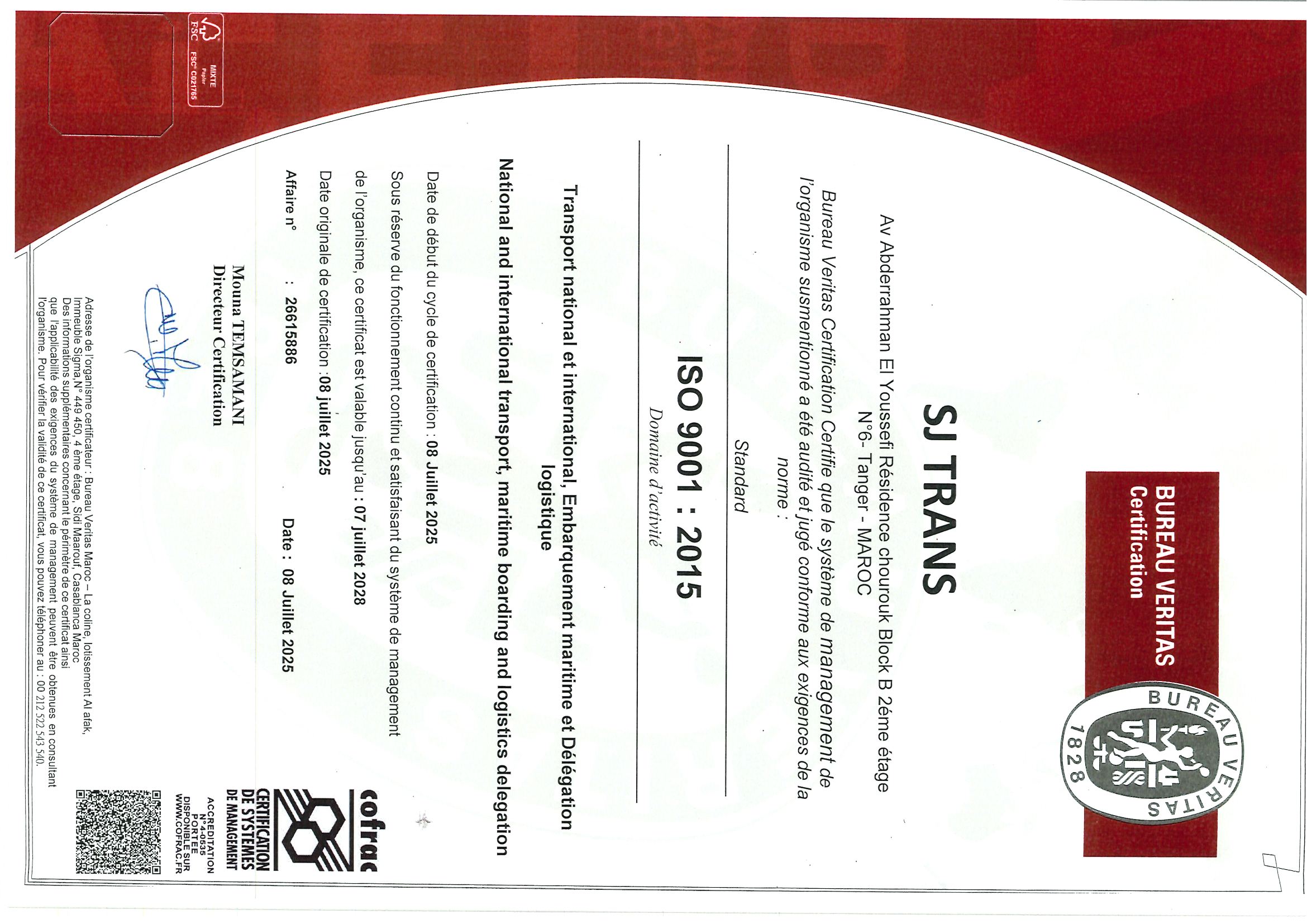
- ISO 9001-certified processes
- IFS Logistics certification (for agri-food flows)
Certifications indicate structured procedures, traceability, and continuous improvement.
6. Evaluate Financial & Operational Stability
Long-term partnerships require:
- Transparent pricing models
- Structured reporting
- Reliable communication
- Sustainable operational capacity
A logistics company Morocco must demonstrate stability and consistency, not opportunistic operations.
7. Ensure Clear Communication & Single Point of Contact
European importers require:
- Rapid response times
- Clear operational updates
- Proactive issue management
A structured freight forwarding Morocco partner should provide a centralized coordination model to reduce complexity.
Miscommunication at port or border level directly impacts delivery schedules.
8. Consider Scalability for Future Growth
Morocco continues to expand as a nearshoring platform.
Your transport company Morocco should be able to:
- Scale shipment volumes
- Support new European destinations
- Integrate warehousing and stock management
- Adapt to urgent transport needs
Scalability ensures long-term supply chain resilience.
Common Mistakes European Importers Should Avoid
- Choosing purely on price
- Ignoring port operational expertise
- Overlooking certification and compliance
- Working with intermediaries lacking local presence
- Failing to request structured reporting
A Logistics Partner Morocco should function as an operational extension of your supply chain.
Why Morocco Requires a Specialized Logistics Partner
Unlike purely domestic EU transport, Morocco–Europe logistics combines:
- Maritime coordination
- Road transport execution
- Port documentation management
- Regulatory alignment
This hybrid model requires integrated expertise, not fragmented service providers.
Conclusion: Selecting the Right Logistics Partner Morocco
For European importers, choosing the right Logistics Partner Morocco directly impacts:
- Delivery reliability
- Cost optimization
- Compliance security
- Operational continuity
- Long-term growth
A professional logistics company Morocco should offer structured processes, cross-border expertise, certified operations, and scalable transport solutions.
Strategic partnership — not transactional booking — is the foundation of successful Morocco–Europe trade.